
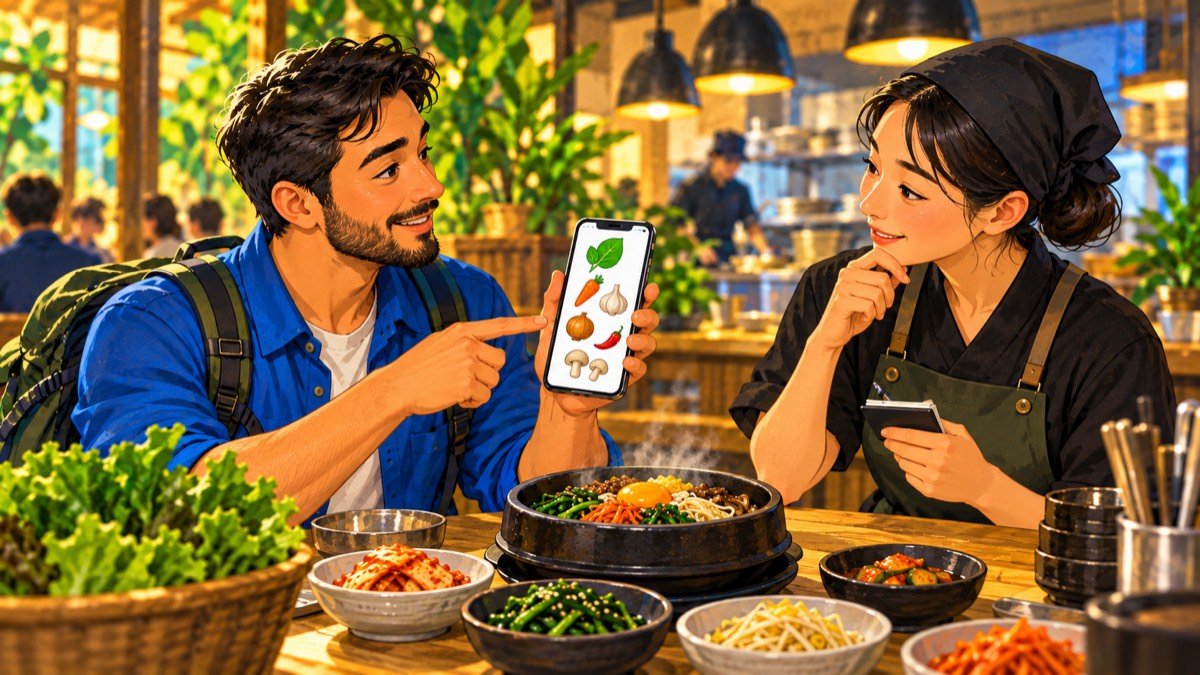
Is that bowl of vegetable noodles actually vegetarian? In Korea, often not. Many dishes that look plant-based are cooked in anchovy broth or seasoned with fish sauce, and most kimchi contains fermented seafood. For travelers with food allergies, the bigger problem is that restaurant menus rarely list ingredients at all.
- The quick answer: why “no meat” is not enough
- Dishes that often hide animal ingredients
- Where vegetarians and vegans have an easier time
- Food allergies: how to read Korean labels
- What to say: copy-and-show Korean phrases
- Cross-contact risks to plan around
- If you have a reaction: 119 vs 1330
- Frequently Asked Questions
- Related guides
- Sources (checked September 30, 2026)
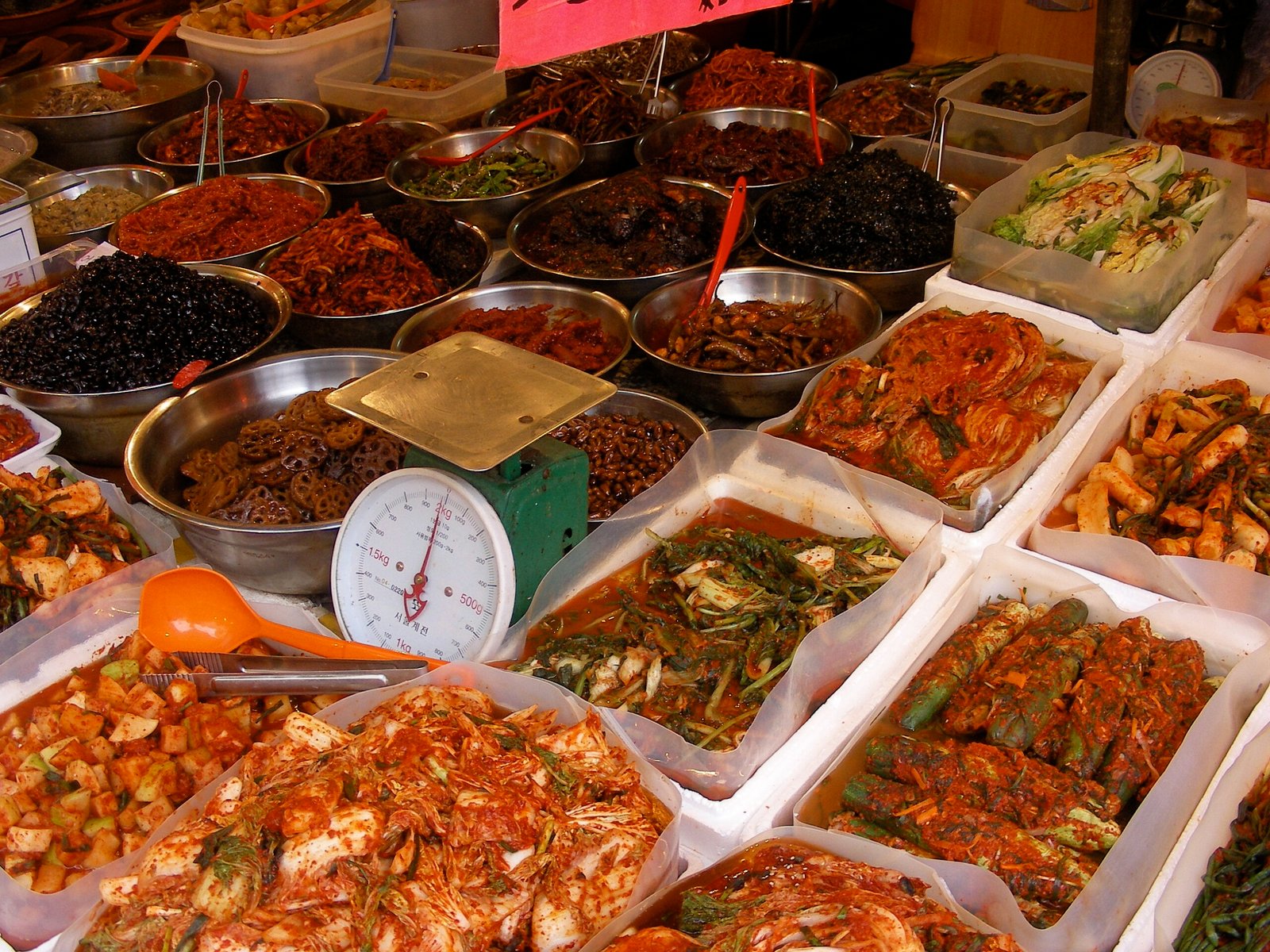

The short answer: ask about the broth and sauces, not just the visible ingredients, carry a short Korean card that explains your diet or allergy, and read the allergen box on packaged food. This guide shows you exactly what to ask, which dishes need a second look, and what to do if something goes wrong.
The quick answer: why “no meat” is not enough
Korean cooking builds flavor from a few ingredients that do not look like meat or fish. Anchovy stock (멸치 육수, myeolchi yuksu), fish sauce (액젓, aekjeot), salted fermented seafood (젓갈, jeotgal), and beef-bone broth (사골, sagol) appear in soups, stews, noodles, sauces, and kimchi. If you only say “no meat,” a server may simply remove the visible pork or beef and leave the broth.
So when you order, name the specific things you cannot eat. That is why the phrases later in this guide list broth, fish sauce, and seafood separately.
Dishes that often hide animal ingredients
Recipes change by restaurant, so treat this table as a list of questions to ask, not a rule.
| Dish | Looks like | Commonly contains | What to ask |
|---|---|---|---|
Kimchi (김치) | Fermented vegetables | Fish sauce or salted shrimp | Is there jeotgal or aekjeot? |
Doenjang-jjigae (된장찌개) | Soybean-paste stew with tofu | Anchovy stock, clams, sometimes beef or pork | What is the broth made from? |
Tteokbokki (떡볶이) | Rice cakes in chili sauce | Anchovy stock, fish cake | Is there anchovy broth or fish cake? |
Gimbap (김밥) | Rice and vegetable rolls | Ham, imitation crab, fish cake, egg | Can you make it with vegetables only? |
Bibimbap (비빔밥) | Rice with vegetables | Minced beef, fried egg | Please leave out the meat and egg. |
Japchae (잡채) | Glass noodles and vegetables | Beef strips | Is there meat in it? |
Kalguksu / naengmyeon (칼국수 / 냉면) | Noodle soup | Anchovy, clam, or beef broth; naengmyeon noodles often contain buckwheat | What is the broth? Is there buckwheat? |
Pajeon (파전) | Green-onion pancake | Egg, wheat, often seafood | Is there seafood or egg in the batter? |
Side dishes (반찬, banchan) arrive automatically and can include fish, dried anchovies, or seafood-seasoned vegetables. You can ignore the ones you do not eat; nobody expects you to finish them. For more on what arrives at the table, see our Korean BBQ etiquette guide and street food guide.

Where vegetarians and vegans have an easier time
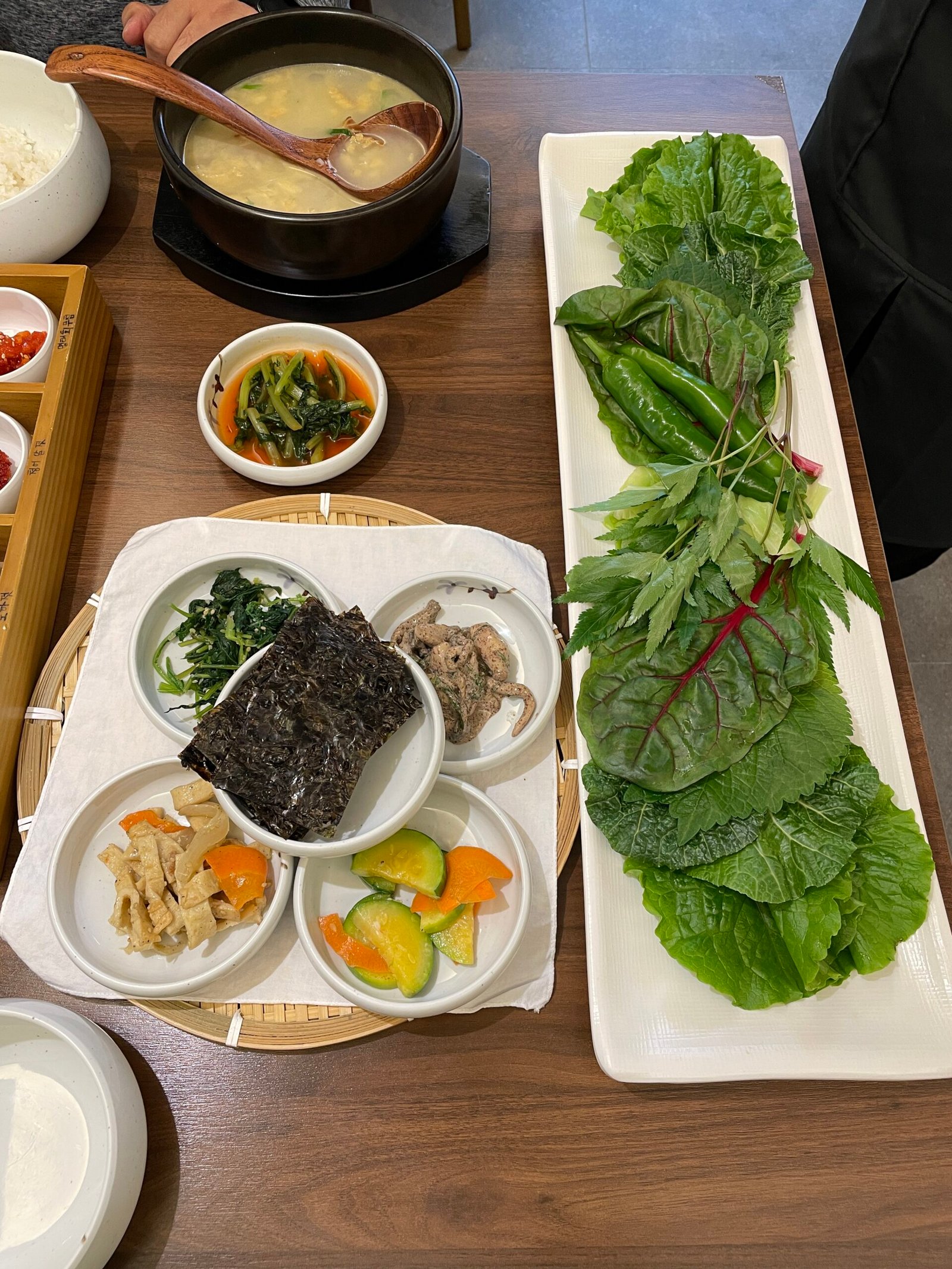
Dedicated vegan and vegetarian restaurants
Seoul in particular has a growing number of restaurants that label themselves vegan (비건) or vegetarian (채식). Search those Korean words in Naver Map or Kakao Map, or use a traveler review app such as HappyCow. Opening hours and menus change often, so check the latest reviews or the restaurant’s own social account before making a special trip. Our Korea travel apps guide explains how to search maps in Korean.
Temple food
Korean Buddhist temple food (사찰음식, sachal eumsik) traditionally avoids meat and fish, and it usually also avoids garlic, green onion, and other pungent vegetables. It is a good fit for many vegetarians, but if you are vegan, still ask whether a dish uses egg or dairy, since modern restaurants that serve temple-style food do not all follow the same rules.
Convenience stores and supermarkets
Packaged food is where you get the most reliable information, because it carries a printed ingredient list and allergen statement (see the next section). Plain rice, fruit, tofu, nuts, bread, and some triangle rice balls can work, but always read the label rather than guessing from the picture. Our convenience store guide and supermarket guide cover the basics of shopping.
Food allergies: how to read Korean labels
Korea’s Ministry of Food and Drug Safety (MFDS) lists the following allergens for packaged-food labeling. Most must be declared when used as ingredients; sulfites have a specific threshold explained below:
| English | Korean on the label |
|---|---|
| Eggs (poultry) | 알류 / 달걀 |
| Milk | 우유 |
| Buckwheat | 메밀 |
| Peanut | 땅콩 |
| Soybean | 대두 |
| Wheat | 밀 |
| Mackerel | 고등어 |
| Crab | 게 |
| Shrimp | 새우 |
| Pork | 돼지고기 |
| Peach | 복숭아 |
| Tomato | 토마토 |
| Sulfites | 아황산류 |
| Walnut | 호두 |
| Chicken | 닭고기 |
| Beef | 쇠고기 |
| Squid | 오징어 |
| Shellfish (including oyster, abalone, mussel) | 조개류 (굴, 전복, 홍합) |
| Pine nut | 잣 |
Sulfites have a labeling threshold. MFDS specifies added sulfites when the final product contains at least 10 mg/kg sulfur dioxide (SO2). An absent allergen statement does not guarantee that a food is safe for your allergy. Read the full ingredient list and check with the manufacturer when you cannot confirm an ingredient or cross-contact risk.
On the package, look for a separate box near the ingredient list, printed on a different background color, that reads something like ○○ 함유 (“contains ○○”). A line mentioning the same manufacturing facility (같은 제조시설) is a cross-contact warning: the product may not contain the allergen as an ingredient, but it was made where that allergen is also processed.
Two limits to keep in mind:
- The list is Korea’s list, not your country’s. Sesame, for example, is not on it, and tree nuts are limited to walnut and pine nut. If your allergen is not listed, read the full ingredient list instead of relying on the allergen box.
- Most restaurants are not labeled. Allergen display rules for food service cover certain large franchise chains that mainly sell children’s favorites such as bakery items, ice cream, burgers, and pizza. At an ordinary Korean restaurant, you will need to ask.
What to say: copy-and-show Korean phrases
Showing a phone screen is often easier than speaking. Copy the lines that apply to you, and consider saving them as a screenshot so they work offline.
| English | Korean (show this) |
|---|---|
| I am vegetarian. I don’t eat meat, fish, or seafood. | 저는 채식주의자예요. 고기, 생선, 해산물을 먹지 않아요. |
| I am vegan. I don’t eat meat, fish, seafood, eggs, milk, or honey. | 저는 비건이에요. 고기, 생선, 해산물, 달걀, 우유, 꿀을 먹지 않아요. |
| Does this contain anchovy broth, fish sauce, or salted seafood? | 이 음식에 멸치 육수, 액젓, 젓갈이 들어가요? |
| Is the broth made with meat? | 육수에 고기가 들어가요? |
| Please leave out the meat. | 고기는 빼 주세요. |
| I have a severe ___ allergy. | 저는 ___ 알레르기가 심해요. |
| Even a small amount is dangerous for me. | 아주 조금만 먹어도 위험해요. |
| Does this dish contain ___? | 이 음식에 ___ 들어가요? |
| Is it cooked on the same grill or in the same oil? | 같은 불판이나 같은 기름에서 조리해요? |
Fill the blank with the Korean word from the allergen table above. If the answer is unclear, a translation app such as Papago can help, but for a serious allergy, “I’m not sure” should mean you order something else.
Cross-contact risks to plan around
- Shared grills and pots. At barbecue and hot-pot restaurants, meat, seafood, and vegetables often cook on the same surface or in the same broth.
- Shared frying oil. Street-food stalls commonly fry fish cakes, dumplings, and vegetables in the same oil.
- Shared broth bases. A kitchen may use one stock for several soups, so a “vegetable” soup can share a base with seafood dishes.
- Busy kitchens. During peak lunch and dinner hours, staff may have less time to check ingredients. Eating slightly off-peak gives you a better chance of a careful answer.
If you are eating alone and want smaller, simpler dishes that are easier to check, our solo dining guide has ideas. For restaurants that take bookings, you can mention your diet when you reserve; see our restaurant reservations guide.
If you have a reaction: 119 vs 1330
This guide is travel information, not medical advice. If you have a serious allergy, talk with your doctor before the trip about the medication you should carry and how to bring it.
- Call 119 for a medical emergency. 119 is Korea’s number for ambulance and fire services; see VISITKOREA’s emergency guidance.
- Use 1330 for interpretation and travel help. The Korea Tourism Organization’s 1330 Travel Helpline offers tourist information and interpretation. In Korea, call 1330; from overseas, call +82-2-1330. Online chat and Wi-Fi calling options are listed on the official helpline page. It is not an emergency service; do not use it instead of 119 in a medical emergency.
Frequently Asked Questions
Is kimchi vegan?
Usually not. Most traditional kimchi is seasoned with fish sauce or salted shrimp. Some restaurants and brands make vegan kimchi, but you need to ask or read the label to confirm.
Is it rude to ask for changes to a dish in Korea?
A polite, specific request such as leaving out meat is generally fine, especially at casual restaurants. Some dishes are prepared in advance, though, so the kitchen may not be able to remove broth or sauce. If they say it is not possible, choose another dish.
Do Korean restaurants list allergens on their menus?
Most do not. Packaged food must declare Korea’s designated allergens, and certain large franchise chains selling items like baked goods, ice cream, burgers, and pizza must display allergen information, but ordinary restaurants generally do not. Ask staff directly and show a written Korean note.
Related guides
- Eating Alone in Korea: A Solo Dining Guide
- Korean Convenience Store Guide
- Restaurant Reservations and Waitlists in Korea
- Essential Apps for Korea Travel
Sources (checked September 30, 2026)
- Ministry of Food and Drug Safety: Food Labeling System (allergen labeling)
- Korea.kr policy briefing: allergen and nutrition information for children’s favorite foods (Korean)
- VISITKOREA: 1330 Travel Helpline & Complaint Center
Targeted verification: October 1, 2026 — MFDS sulfite labeling threshold and VISITKOREA emergency/helpline numbers. Other sources above were checked September 30, 2026.
Dish ingredients vary by restaurant and change over time. This guide explains common patterns; always confirm with staff or the product label.