
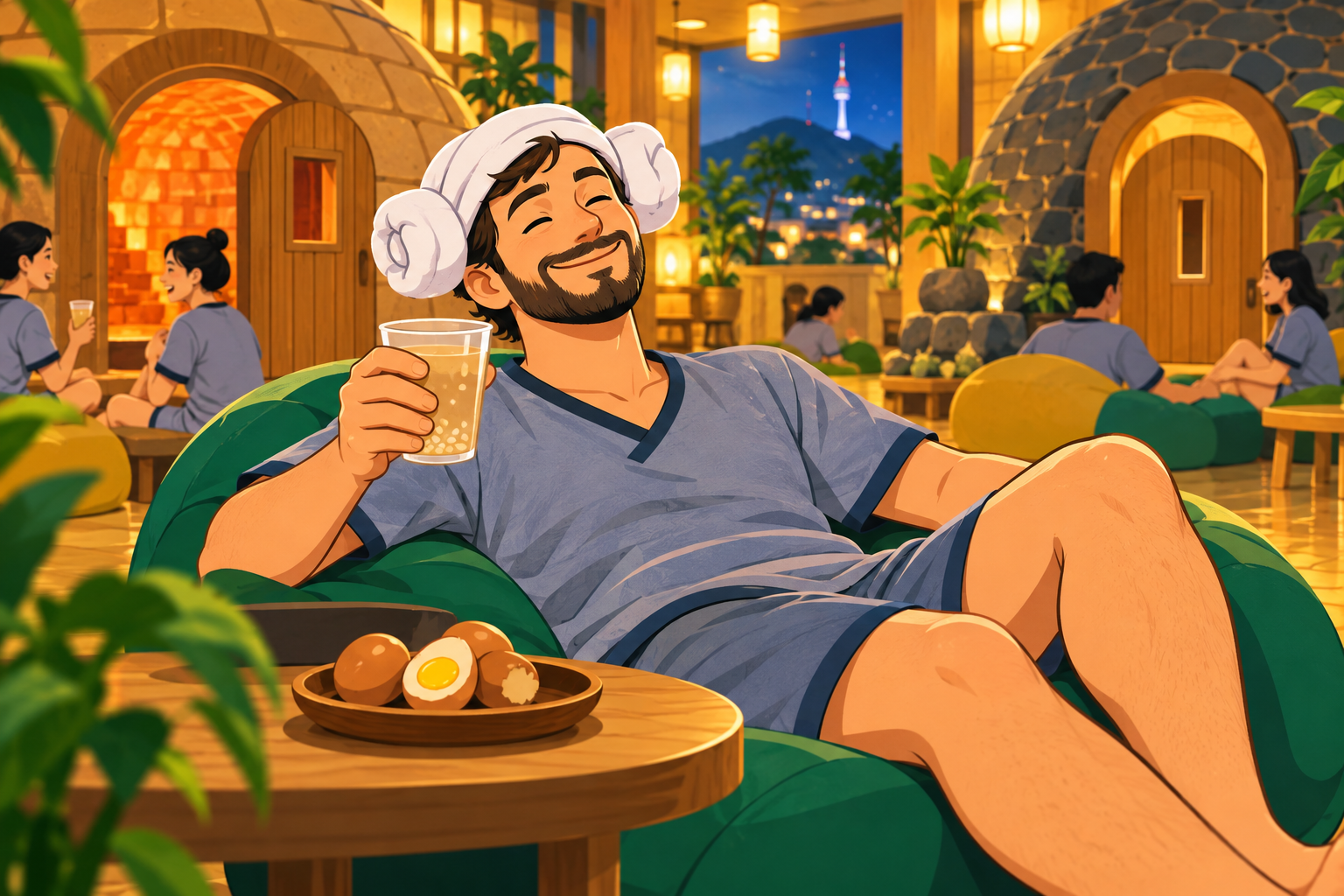
A jjimjilbang (찜질방) is a Korean sauna and bathhouse where you can soak, try heated rooms, and unwind in a shared lounge. It can feel unfamiliar at first—especially the gender-separated bathing area—but the visit is straightforward once you know what happens in each zone.
This first-timer’s guide explains the usual flow, what to wear, what to bring, and which details to check before you go. Rules, hours, and ticket options vary by facility, so use the venue’s current official information for the final word.
Jjimjilbang at a glance
- Bathing areas: traditionally separated for men and women; guests bathe without clothes in their assigned area.
- Shared lounge and sauna rooms: usually mixed-gender and entered in the T-shirt and shorts provided by the facility.
- Typical visit: check in, use your assigned locker, shower and bathe if you choose, change into the provided outfit, then relax in the common area.
- Bring: toiletries if you prefer your own, a hair tie, and a little cash for optional extras.
- Before you leave: confirm the ticket, operating hours, and any overnight or age policies directly with the facility.
What is a jjimjilbang?
The word combines jjimjil (a heated treatment or sauna) and bang (room). A jjimjilbang is more than a sauna cabin: many combine hot baths, several heated rooms, a communal rest area, and sometimes food or other paid services. The exact mix depends on the venue. A smaller mogyoktang may be mainly a public bath, while a large modern spa may add pools and family facilities.
The key distinction is clothing: the traditional bath area is gender-separated; the shared lounge and sauna areas are clothed. Follow the signs and staff instructions at your specific location.
Your first visit, step by step
1. Check the ticket before paying
Look for the facility’s current ticket options and ask whether your admission includes the communal jjimjil area, the bathing area, or both. Some venues sell different passes for different zones. Check opening hours, last entry, age rules for children, and whether overnight stays are allowed. Do not assume every place is open 24 hours.
You can ask: “찜질방 이용하고 싶어요” (Jjimjilbang iyonghago sipeoyo) — “I’d like to use the jjimjilbang.” If you are unsure what is included, show the ticket screen or ask staff before paying.
2. Put your shoes and valuables away
Many facilities have a shoe locker near the entrance and a separate locker for clothes and bags. You may receive a wristband or key that is also used to charge food and optional services to your account. Keep the key with you and check how the venue settles the bill when you leave.
3. Use the bathing area only if you are comfortable
The bathing section is separated by gender. In a traditional bath area, guests normally remove their clothes; swimsuits are not the default. Shower thoroughly before entering a shared bath, tie back long hair, and keep phones and cameras away. If public nudity is not comfortable for you, you can skip this section. Some modern spas sell access to clothed jjimjil zones separately, but not all do—ask first.
4. Change into the facility outfit for shared areas
After bathing, dry off and put on the T-shirt and shorts provided for the communal lounge, if the venue provides them. These shared spaces are where you can rest, visit different sauna rooms, or meet friends. Keep your locker key on its wrist strap or in the place staff recommend.
5. Start with a cooler room and take breaks
Sauna rooms can have very different temperatures. Start with a cooler room, leave whenever you feel uncomfortable, and take breaks to drink water. You do not need to try every room—or stay for a set amount of time. Avoid pushing through dizziness or nausea; step out and cool down.
6. Try the classic snacks
Roasted eggs and chilled sikhye (sweet rice drink) are a familiar jjimjilbang pairing. Many venues also have a snack bar or cafeteria, but menus and payment methods vary. A little cash can be useful for small extras, even if admission accepts a card.
What should you bring?
- Your toiletries: shampoo, conditioner, cleanser, and skincare you prefer. Some venues sell small toiletries, but do not assume they are complimentary.
- A hair tie: useful in the bath and sauna areas.
- A payment backup: bring a physical card and a small amount of cash for add-on services or snacks.
- As little as possible: store valuables securely and keep only your locker key with you.
Towels, a basic outfit, or bath supplies may be included, sold separately, or not available at a particular venue. Check the facility’s current information rather than packing around a general rule.
Body scrub (seshin) is optional
Seshin (세신) is a body-scrub service offered at some bathhouses. It is separate from admission, involves hands-on contact, and may cost extra. Ask the price and what the service includes before agreeing; you can decline or request a smaller service if offered. It is completely fine to skip it.
Can you sleep overnight?
Some larger jjimjilbangs have shared rest or sleeping areas, but they are not private hotel rooms. Hours, overnight access, available bedding, and extra charges vary. Check directly before relying on a jjimjilbang for a late-night arrival or accommodation. If privacy, quiet, or secure luggage storage matters to you, book a hotel or guesthouse instead.
Simple etiquette to remember
- Shower before getting into a shared bath.
- Follow the gender-zone and clothing signs; use the provided outfit in shared spaces.
- Keep voices low in quiet rooms and never take photos in bathing or changing areas.
- Take a water break between hot rooms and leave if you feel unwell.
- Ask before using optional services, and confirm the price first.
Jjimjilbang FAQ
Do I have to get naked?
Only if you choose to use the traditional bathing area, where nudity is customary in the gender-separated section. The communal jjimjil lounge is clothed. If you prefer not to use the bath area, ask whether the venue offers a jjimjil-only ticket.
Can couples or families use the same area?
Bath areas are generally gender-separated, while many communal sauna lounges are shared. Family facilities, children’s rules, and exceptions differ, so check the specific venue before visiting.
Is a jjimjilbang a good place to sleep?
It can be a convenient shared rest stop at venues that permit overnight stays, but it is not a substitute for private accommodation. Confirm access, hours, extra fees, and sleeping arrangements directly.
What is the difference between a jjimjilbang and a Korean bathhouse?
The terms overlap in everyday use. A mogyoktang is generally a public bath; a jjimjilbang typically adds heated rooms and shared leisure areas. Individual venues may use the names differently.
Make it an easy first visit
Choose a venue with current English information if that helps, arrive with enough time to read the signs, and treat each section as optional. A jjimjilbang is not a test of how long you can tolerate heat or how much of the experience you must try. Start with the parts that feel comfortable, enjoy a cup of sikhye, and take a break whenever you need one.
For the rest of your trip, see our guides to using public transportation in Korea, Korean convenience stores, and first-time visitor etiquette and common mistakes.
Sources and last checked
Last checked: September 28, 2026. The sources below are useful background, but facility-specific details can change; check the place you plan to visit before traveling.
- Korea Tourism Organization: Tips for enjoying a jjimjilbang (last updated November 2024; facility details can change).
- Korea.net: Korean bathhouse culture and seshin (cultural background; published in 2019).
Hello world!
하이르