
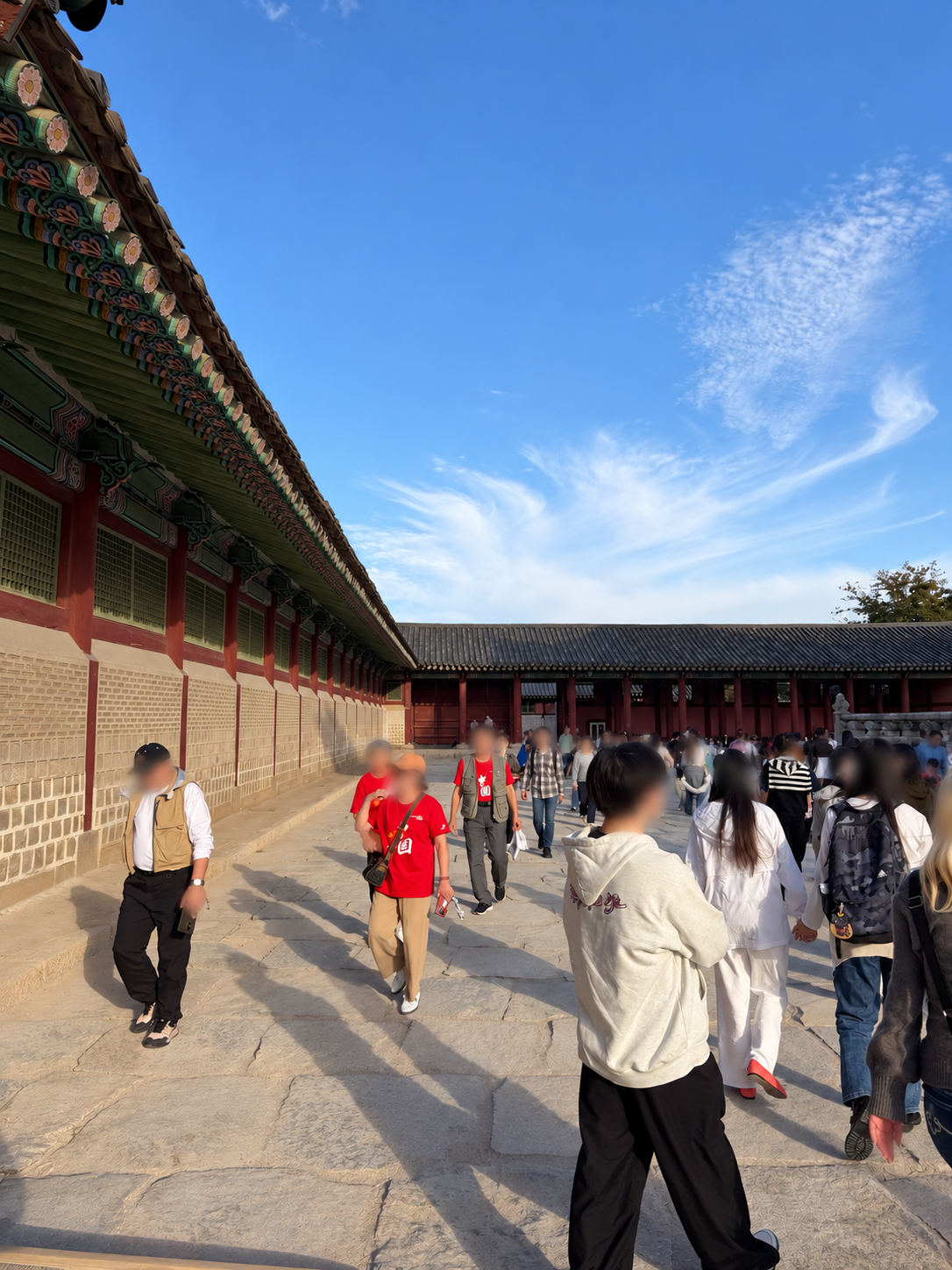
Photo credit: All photographs in this guide, including the Gyeonghoeru cover photo, were personally taken by me, the author of Local Korean Guide. The Gyeonghoeru cover and pondside photographs are unedited; faces in the two courtyard photos were obscured with AI for privacy.
Gyeongbokgung is easier to enjoy when you choose a few places to linger rather than try to photograph every building. For a first visit, start at the main gates, walk through the central royal halls, and make time for the pond beside Gyeonghoeru. Allow roughly two hours for an unhurried walk with photo stops; that is our planning suggestion, not an official tour duration.
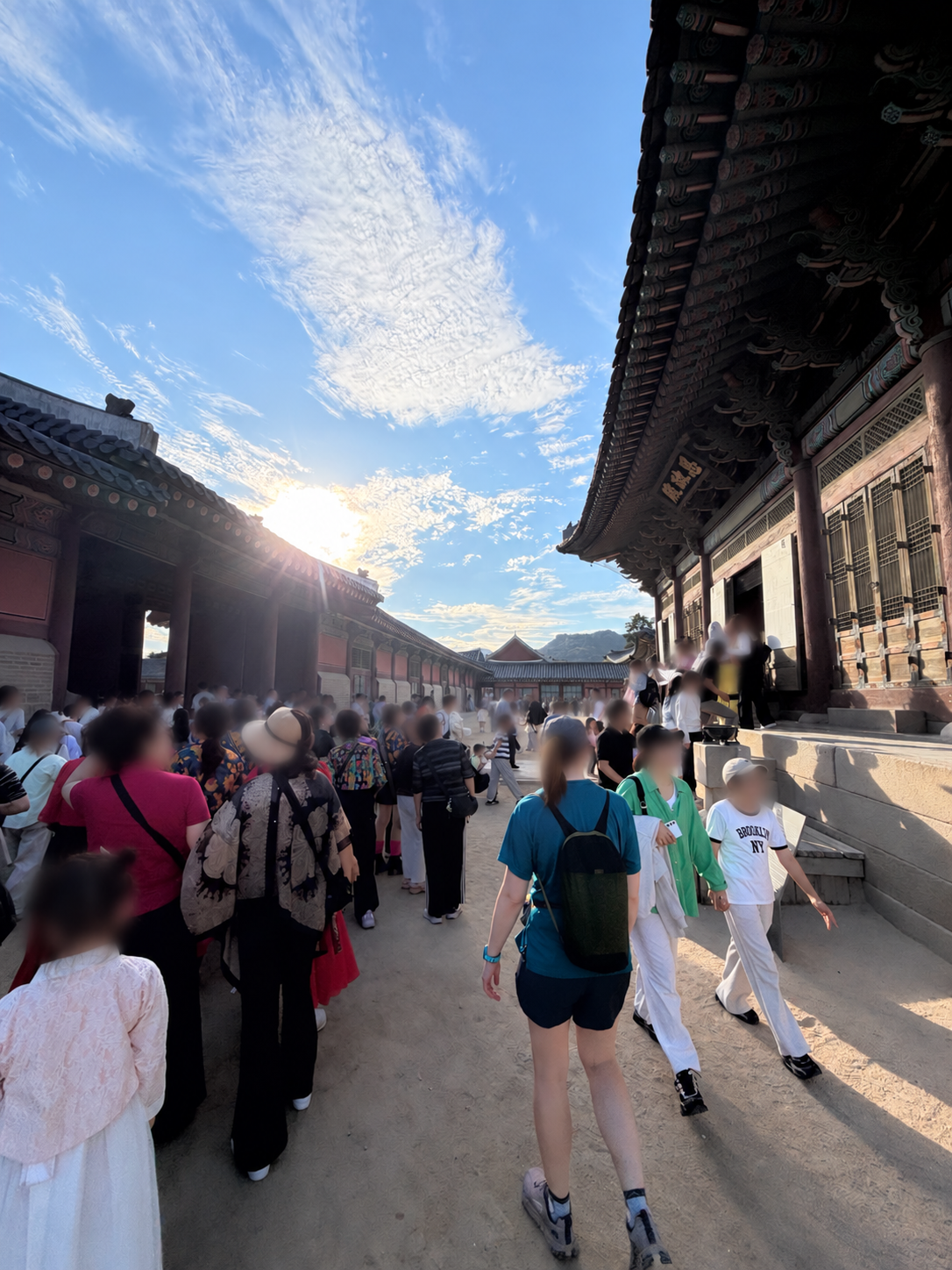
This guide pairs a suggested daytime route with photographs taken by the Local Korean Guide author at Gyeongbokgung. The photos show a busy visit, with people moving through the courtyards and along the halls. The two courtyard photographs were edited with AI to obscure faces for privacy and should not be used as precise architectural records. The Gyeonghoeru cover photograph is the author’s unedited image. They illustrate that visit, not the crowd level you will necessarily find.
Still deciding which palace to visit? Start with our comparison of Seoul’s palaces. This page focuses on walking and taking photos inside Gyeongbokgung.
Before you go: closing day, tickets, and last entry
Check the date before choosing the time. Gyeongbokgung normally closes on Tuesdays. When a regular closing day falls on a public or substitute holiday, it opens and the closure moves to the first following non-holiday. Event notices can also affect your visit; check the official palace page before leaving.
| Season | Daytime hours | Last admission |
|---|---|---|
| January–February; November–December | 9:00 a.m.–5:00 p.m. | 4:00 p.m. |
| March–May; September–October | 9:00 a.m.–6:00 p.m. | 5:00 p.m. |
| June–August | 9:00 a.m.–6:30 p.m. | 5:30 p.m. |
These are the regular daytime hours on the official hours page, checked October 9, 2026. Last admission is an hour before closing, so arriving just before it leaves little time for the full route.
Standard individual daytime admission is ₩3,000 for overseas visitors aged 19–64. Overseas visitors aged 18 and under or 65 and over qualify for free admission under the published rules; carry identification to establish eligibility. Eligible hanbok wearers can also enter free. Verify your category on the official admission page. Gyeongbokgung is excluded from the weekly Wednesday free-admission rule shown there.
For hanbok admission, wear a complete outfit: a jeogori upper garment with a skirt or pants, properly worn and fastened. A partial outfit does not qualify. Read the official hanbok guidelines before renting, and leave time to return the clothing. Night openings and special programs have their own notices and ticket arrangements; a daytime ticket is not a promise of evening access.
A manageable first-visit walking route
Use the official palace map and route page alongside signs on the grounds. The center offers 40-, 60-, and 90-minute course options. Our route below adds room for pauses and photography; access restrictions or staff directions take priority.
- Gwanghwamun and Heungnyemun: start with the gates and the approach into the palace. Take a wide view before moving onward, keeping the central walking path clear.
- Geunjeongjeon: spend time in the main throne-hall courtyard. Look at the relationship between the hall, its raised stone platform, and the surrounding rooflines before moving closer.
- Sajeongjeon, Gangnyeongjeon, and Gyotaejeon: continue through the central halls. This is a good part of the walk for slower observation of wooden doors, painted eaves, and the spaces between buildings.
- Gyeonghoeru: head toward the pond for a different view of the palace. Viewing the pavilion from the grounds and entering the pavilion are different activities; check official arrangements for any special interior visit.
- Finish while you still have energy: retrace your route or follow an open signed exit. Extend the walk only if time, weather, and your feet allow.
If you have only an hour, shorten the route to the gates, Geunjeongjeon, and one nearby area rather than rushing through every hall. With children or someone who needs frequent rests, set a turnaround time early and consult the map for toilets and facilities.
Gyeonghoeru: the pavilion beside the pond
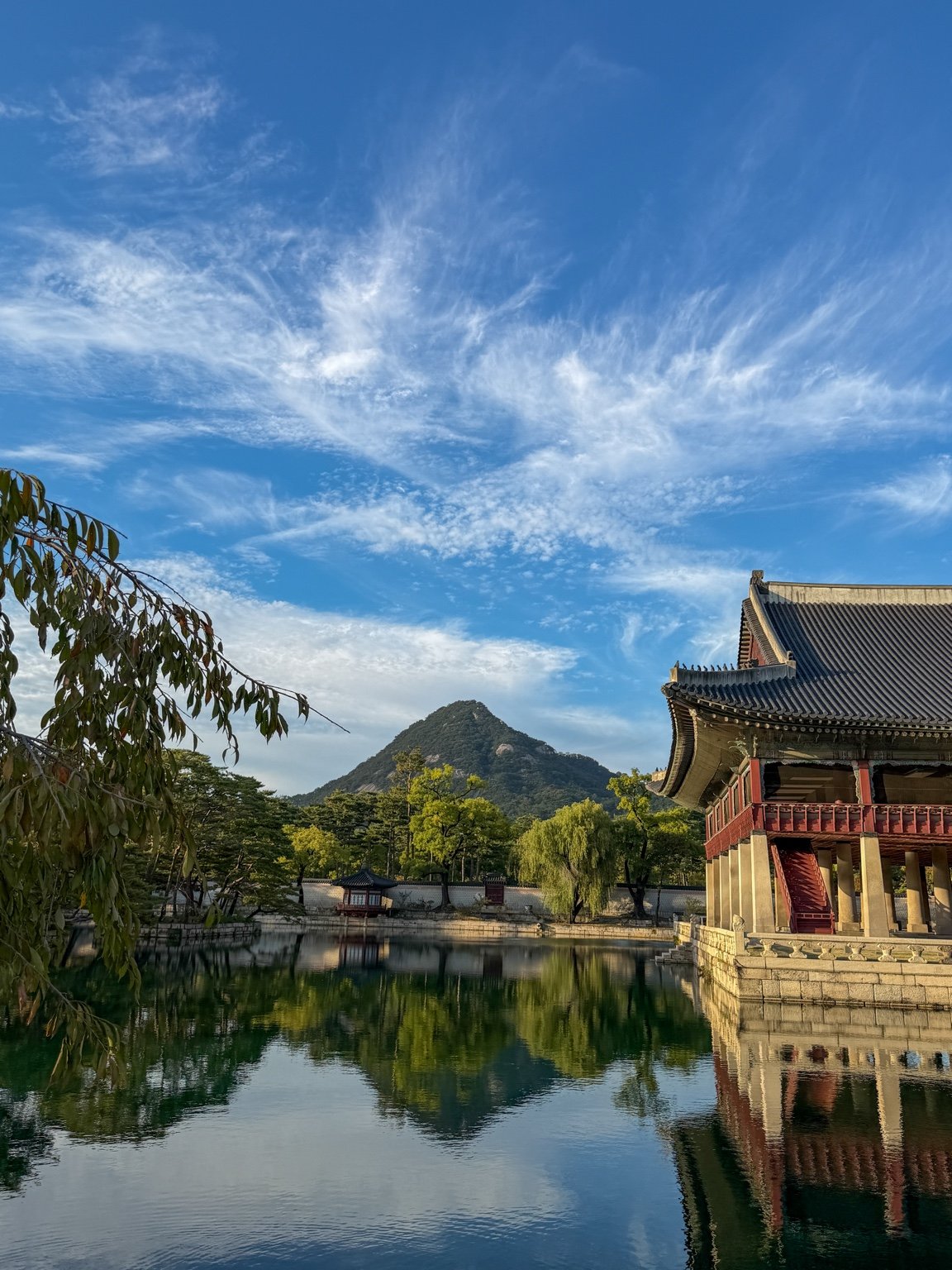
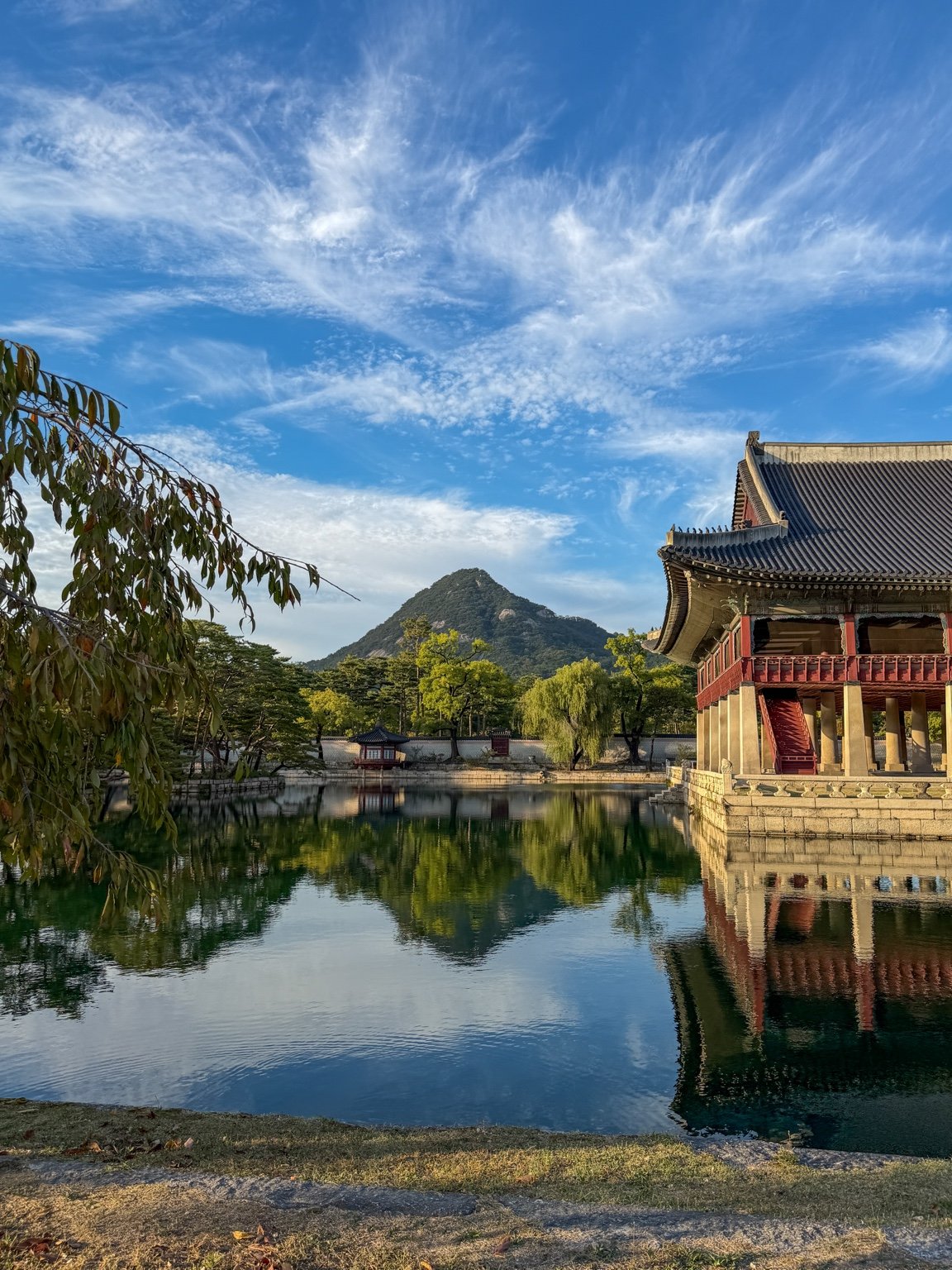
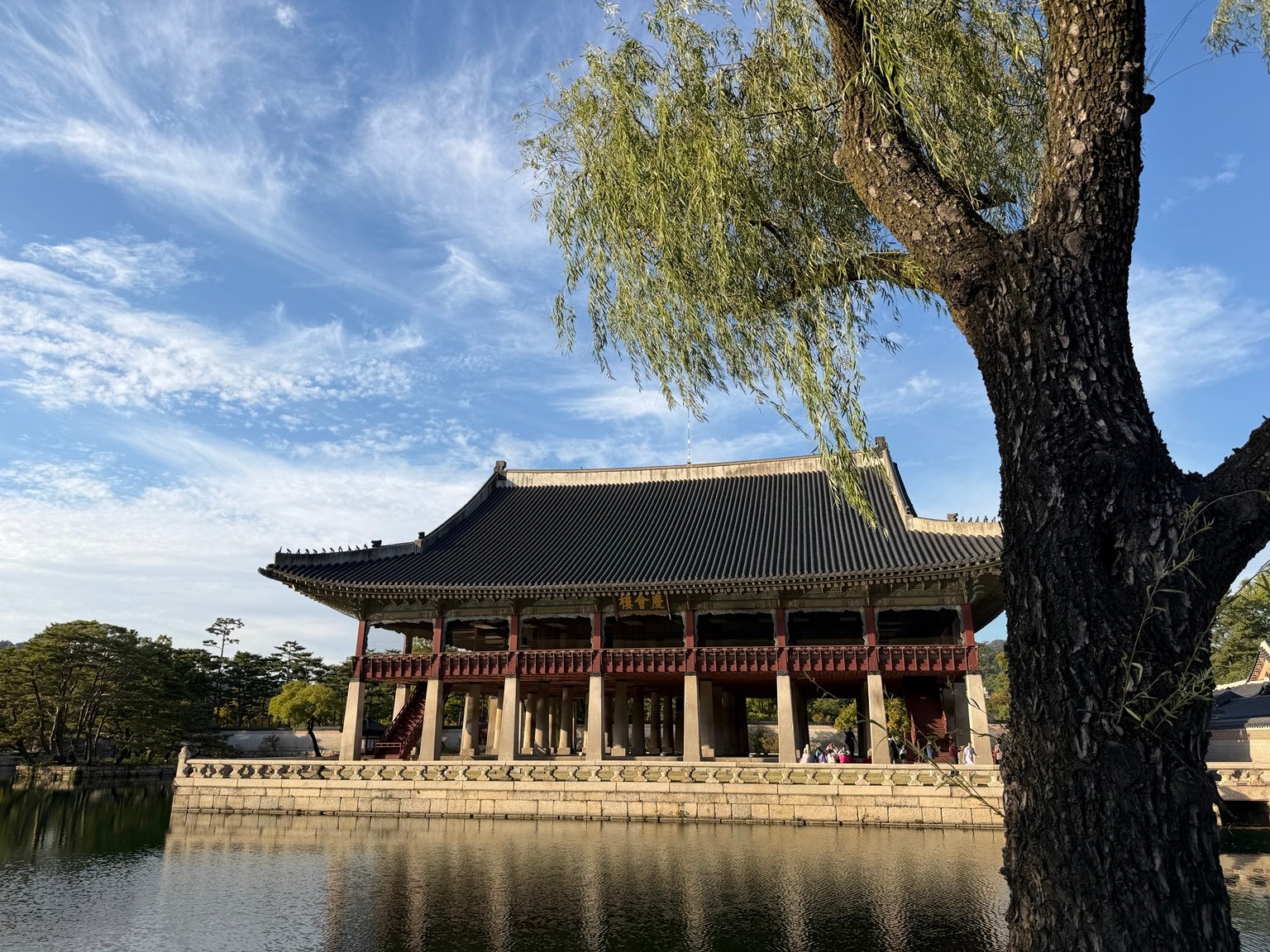
Northwest of Geunjeongjeon, Gyeonghoeru stands on an island in a pond. It was used for royal banquets celebrating important occasions and receiving visiting envoys. The present pavilion was rebuilt in 1867 during King Gojong’s reconstruction of Gyeongbokgung, after the earlier building burned during the Japanese invasions. It is designated a National Treasure. See the Korea Heritage Service’s Gyeonghoeru record for its history.
For a simple visit, pause along the permitted pondside paths and look at the pavilion’s stone columns, broad roof, and reflections. The author’s cover photo shows this pondside view, framed by a tree. A reflection depends on the light and water surface; the photograph does not guarantee the same conditions on your visit.
Seeing the exterior is different from entering the pavilion. Interior access is through a separate guided special-viewing program, not automatic with ordinary palace admission. The official 2026 Gyeonghoeru–Hyangwonjeong notice, checked October 9, lists an autumn season from September 2 to October 30 on Wednesdays and Fridays, at 10:00 a.m. and 2:00 p.m., with a roughly 70-minute Korean-language guided visit. The program does not operate during October 7–11, 2026; other excluded dates are listed in the notice.
The program is free, but palace admission is separate. Advance online booking is required, with up to two seats per person and 25 people per session; the booking window is 10:00 a.m. nine days before the visit through 11:59 p.m. three days before. Children aged six and under cannot join, including as accompanying children. The notice provides no foreign-language commentary. Confirm language suitability, identification requirements, access, and available dates before building your day around it. We have not checked live seat availability or personally verified the interior program. These are the announced 2026 arrangements, not a standing year-round schedule.
Taking photos when the courtyards are busy
The author’s photographs show why a palace visit does not always look like an empty postcard. Visitors fill the foreground, while the architecture remains visible above and around them. Work with the space you have rather than wait indefinitely for an empty frame.
- Look upward: a roofline and sky composition can show the painted eaves without making strangers the main subject.
- Use the side of the walkway: pause where people can pass safely. Do not stop in a doorway or on a narrow step for a long photo session.
- Watch the bright sky: in backlit scenes, tap the building on your phone screen and check the result. A brighter exposure can reveal woodwork but wash out the clouds; take a second frame with a different exposure.
- Try a detail: doors, brackets, roof tiles, and repeating columns can make a useful photograph without needing a completely clear courtyard.
- Respect people and barriers: avoid close-up portraits of strangers, ask before photographing someone as your subject, and stay within permitted areas.
Starting near opening time gives you more of the day to work with, but does not guarantee quiet grounds. Weather, school visits, holidays, and events can change the atmosphere. The photos here do not establish a reliable “best hour” for avoiding crowds.
Make the walk comfortable
Wear comfortable shoes for stone and unpaved surfaces. Bring water and prepare for the forecast: exposed courtyards can feel very different from shaded corridors. For a summer visit, build in breaks; in colder weather, allow for wind and a shorter daylight window.
Save 경복궁 or Gyeongbokgung Palace in your map app before you travel. The official address is 161 Sajik-ro, Jongno-gu, Seoul. Confirm the route to the entrance you intend to use rather than navigating only to the center of the grounds. Our Naver Map search guide can help when an English place name gives confusing results.
Keep the rest of your day flexible. A palace walk, a meal, and one nearby stop are a more comfortable plan than several timed attractions immediately afterward. If you are carrying a suitcase, deal with storage before starting; see our Seoul luggage-storage guide.
Quick questions
How long should I allow at Gyeongbokgung?
Roughly two hours is our suggested allowance for this route with photo stops. A shorter visit is possible if you choose fewer areas. It is not a measured walking time or a guaranteed tour duration.
Can I visit on Tuesday?
Tuesday is the regular closing day. Public-holiday exceptions and official notices can change the calendar, so check the actual date.
Can I get the same photos without crowds?
You can look for similar roofline and corridor compositions, but crowd levels, light, and access vary. The photographs document one visit and do not promise an empty scene.
Sources checked October 9, 2026: Royal Palaces and Tombs Center hours and closures, admission and address, map and course options, and hanbok guidelines. The route and photography advice are editorial suggestions. The author supplied the photos and confirmed taking them at Gyeongbokgung; the exact capture date was not independently established. Recheck official notices for your travel date.