
Feeling overwhelmed planning your first Korea trip? You don’t need to prepare for everything — just a handful of things that make arrival day go smoothly. Here’s the short list.
Before you fly
Check entry rules for your passport and travel dates
Visa and arrival requirements depend on your passport, purpose, and length of stay. Check the Korean Visa Portal or the nearest Korean embassy before booking non-refundable travel. A temporary K-ETA exemption through December 31, 2026 applies only to specified nationalities; it is not a blanket exemption for every visa-free visitor. Confirm your own passport on the official K-ETA site.
The e-Arrival Card is a separate entry declaration, not a visa or K-ETA. Most foreign visitors need an arrival declaration, but exemptions apply—for example, travelers with a valid K-ETA. Use the official e-Arrival Card Navigator to check your case. If required, the free online form can be submitted within three days before arrival (Korea time); a paper form is also an option. Use only www.e-arrivalcard.go.kr: the official service warns about lookalike sites that charge a fee. A temporary K-ETA exemption does not itself prove that you are exempt from the separate arrival declaration.
Save your accommodation address in Korean
Keep your hotel name and address in both English and Korean. Screenshots help if your phone battery is low or a driver cannot read the English address.
Choose your mobile data plan
Check that your phone supports eSIM and is carrier-unlocked. Follow your provider’s installation instructions and confirm when the plan’s validity starts before installing it; do not assume every plan uses the same activation timing. Use your travel plan for mobile data after arrival according to those instructions. Our Korea eSIM guide explains what to check before purchase.
Download essential apps
Naver Map is practical for local directions, Papago helps translate signs and menus, and Kakao T is useful for taxis.
Prepare a payment backup
Bring at least one backup card and a small amount of Korean won. A T-money card is useful for public transportation.
At the airport
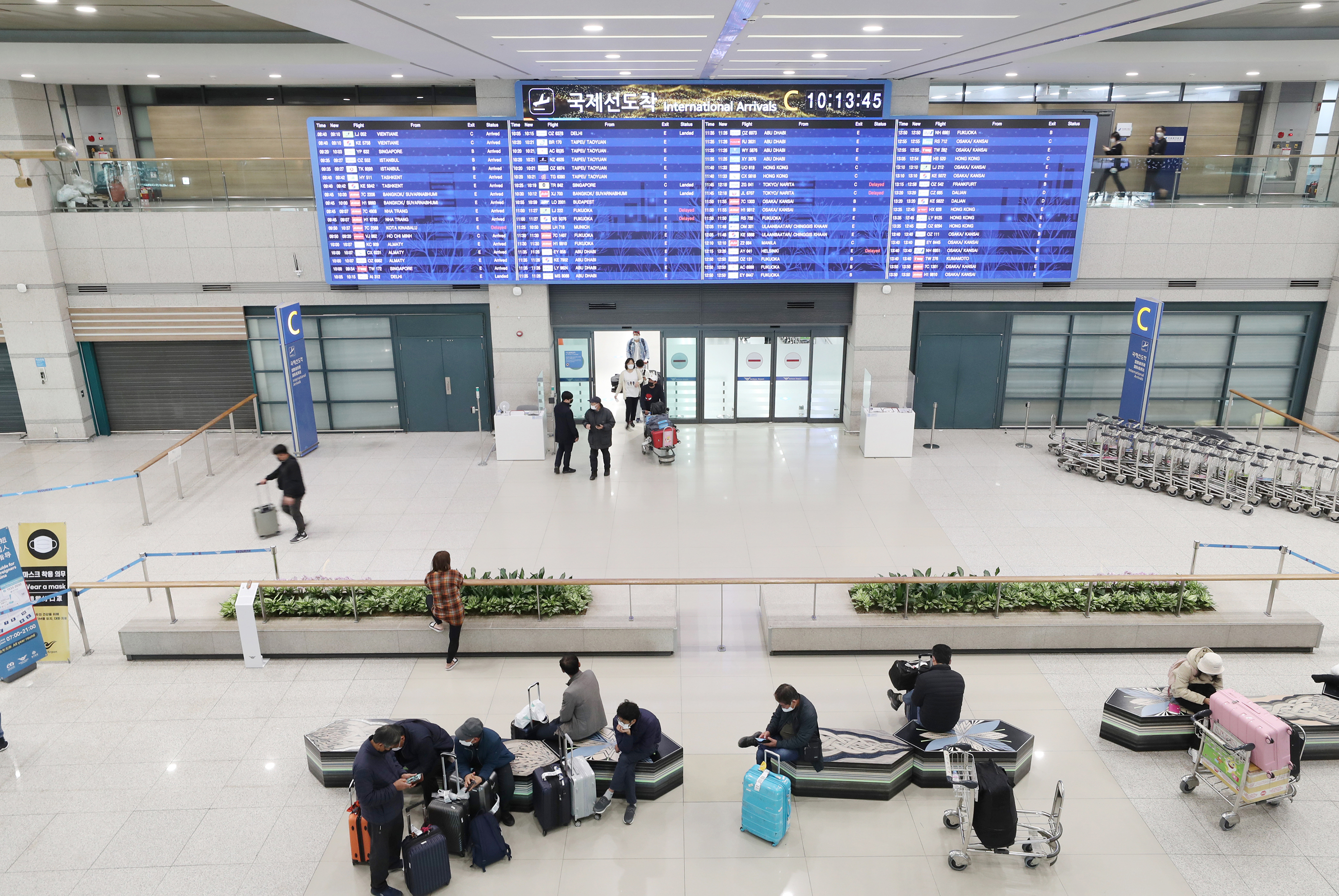
If an arrival declaration is required for your situation, complete it before immigration inspection; do not wait until after baggage claim. Check the official e-Arrival Card guide for the submission window and procedure. After immigration and baggage claim, connect to mobile data, and check your hotel address and the exact airport route before leaving the terminal. Confirm whether your flight arrives at Terminal 1 or Terminal 2 before choosing rail, bus, or taxi instructions. Keep a small amount of cash available for any top-up or cash-only purchase you choose.
During your trip
Plan two or three main areas per day instead of rushing across the entire city. Learn a few phrases such as annyeonghaseyo and gamsahamnida. Wait for people to exit the subway before boarding, keep your voice low on public transport, and remember that tipping is not generally expected in Korea. If you have not planned your route yet, our 7-day South Korea itinerary is a good starting point.
Quick checklist
- Passport; visa/K-ETA requirement checked for your nationality and dates
- e-Arrival Card requirement checked in the official Navigator; submit only within the permitted window if required
- Hotel address in Korean
- eSIM or SIM plan
- Naver Map, Papago, and Kakao T
- Two payment methods
- A small amount of Korean won for cash-only purchases or transit top-ups
- Comfortable shoes
- A flexible itinerary
The best first trip is not the one with the most stops. It is the one that leaves enough time to enjoy each neighborhood.
Frequently Asked Questions
Do I need an eSIM before arriving in Korea?
No. You can arrange connectivity before departure or after arrival. If you choose a travel eSIM, first check device compatibility, carrier lock, and the provider’s installation and validity-start instructions. Installing before departure is appropriate only when those instructions allow it.
Is tipping expected in Korea?
No, tipping is not customary and is not expected at restaurants, taxis, or hotels.
How much cash should I bring?
A small amount for cash-only stalls and T-money top-ups is enough; most places accept cards.
Related Guides
- Best Time to Visit South Korea: A Season-by-Season Guide
- 7-Day South Korea Itinerary for First-Time Visitors
- Best eSIM for South Korea: What Travelers Need to Know
- T-money vs Climate Card: Which Korea Transit Card Should You Get?
- Incheon Airport to Seoul: A Practical Arrival Guide
Information basis
This checklist was cross-checked against official travel, airport, and transit resources:
- VISITKOREA — official Korea travel information
- Incheon International Airport — arrival and passenger information
- Official e-Arrival Card — requirements navigator, form, and fraud warning
- K-ETA — 2026 temporary exemption notice and eligibility updates
- Korean Visa Portal — entry and visa information
- T-money — official transit-card information
- Naver Map — official map service
Targeted verification: October 1, 2026 — arrival-declaration timing against the official e-Arrival Card guide, and iPhone eSIM compatibility/carrier-lock guidance against Apple Support. Follow your own device manufacturer and plan provider for other models and activation details.
Information check: Official links and checklist guidance were reviewed on September 28, 2026. Entry rules, app features, payment acceptance, transport operations, and connectivity options can change; confirm current requirements before departure.