
Get a T-money card for a multi-city trip: it works on subways and buses across Korea and you reload it as you go. Consider Seoul’s short-term Climate Card only if you will ride a lot inside Seoul — passes cost ₩5,000 for 1 day up to ₩20,000 for 7 days, plus ₩3,000 for the card, and they do not cover airport buses, Sinbundang or GTX.
Quick facts
- Climate Card short-term passes: 1 day ₩5,000 · 2 days ₩8,000 · 3 days ₩10,000 · 5 days ₩15,000 · 7 days ₩20,000
- Physical card: an extra ₩3,000
- A 1-day pass lasts until the last bus or subway that day, not 24 hours, and starts when charged
- Airport: you can get off at Incheon Airport with the pass but not board there
- The 30-day and postpaid Climate Card products ended on October 1, 2026
- Last checked: October 1, 2026
Choosing between a T-money card and Seoul’s Climate Card depends on where you will ride and how often—not which card sounds more convenient. For a multi-city Korea trip, T-money is the flexible default; for several transit-heavy days inside Seoul, compare the short-term Climate Card pass with your planned rides.
At a glance: which card fits your trip?
| Your plan | Usually the simpler choice | Why |
|---|---|---|
| Seoul plus Busan, Jeju, or other cities | T-money | It is a stored-value card used on local transit in many Korean cities; Seoul’s Climate Card is limited to eligible services. |
| One to seven consecutive days, mostly in Seoul, with frequent eligible rides | Compare a short-term Climate Card pass | Choose only if its service area covers your routes and its pass price is below your estimated eligible fares. |
| A few rides or uncertain plans | T-money | Pay per trip and avoid buying an unlimited pass you may not use enough. |
T-money: flexible across cities
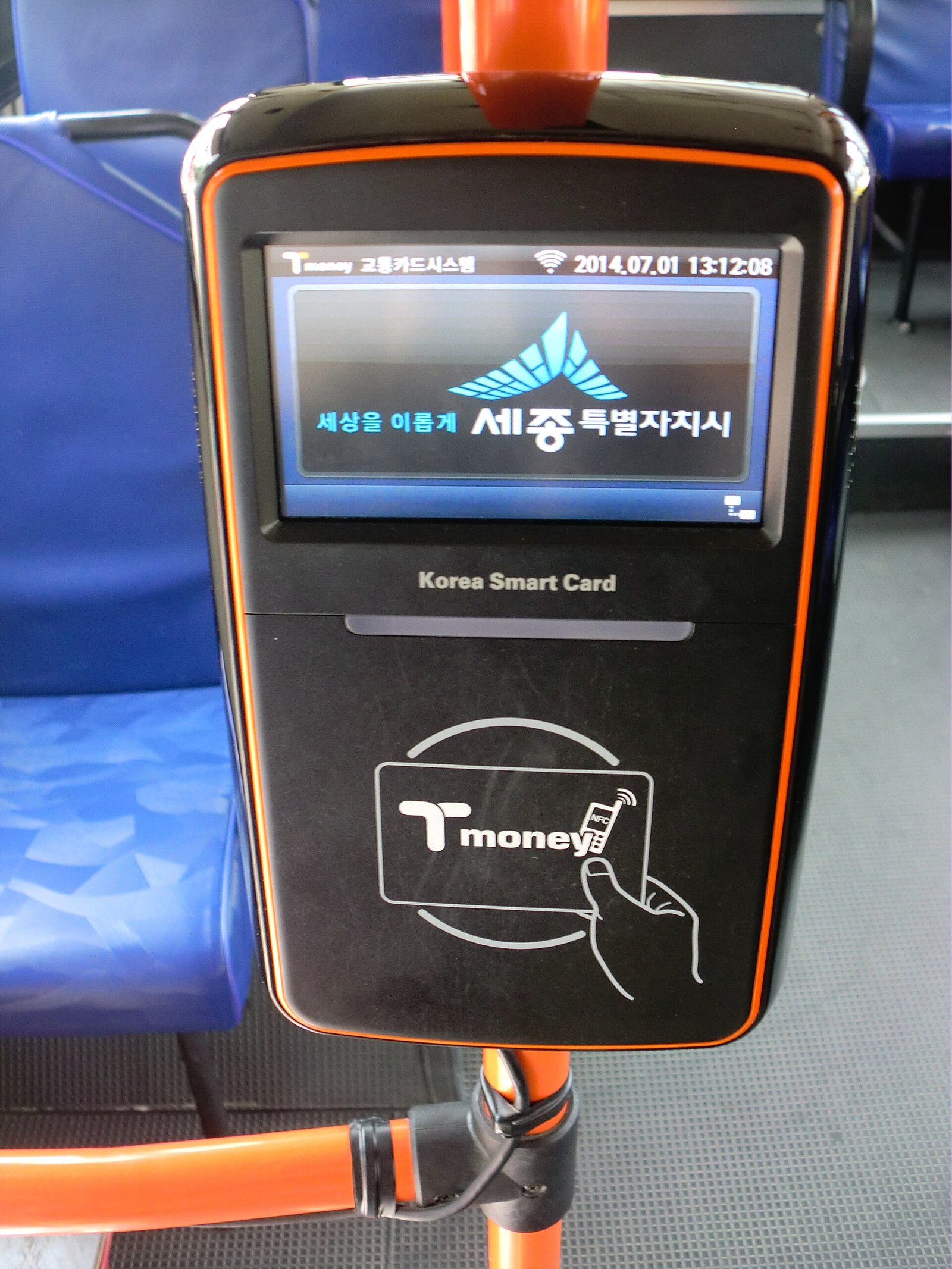
T-money is a rechargeable stored-value transit card widely accepted on subways and buses in Seoul and many other Korean cities. It is practical for occasional rides, a longer stay, or an itinerary that moves between cities. Acceptance and transfer rules can differ by route, so check the local transit operator for an unusual or regional service. T-money is not an unlimited pass: each eligible ride is charged from the card balance.
Buy and top up a physical card at participating convenience stores or transit locations, and keep some Korean won available because recharge options differ. If you arrive at Incheon Airport, you can use a separate AREX ticket or a suitable transit card for your route; see our Incheon Airport to Seoul guide.

Climate Card: a Seoul pass with route limits
The tourist short-term Climate Card is not a nationwide pass. Seoul’s updated short-term guide lists subway travel within Seoul plus alighting at Incheon Airport, and Seoul-licensed city and town buses. Sinbundang, GTX, airport buses, and intercity services are not covered. Short-term passes do not include Seoul Bike or Hangang Bus.
October 1, 2026 check: Some official English summaries still show older suburban coverage. Use Seoul’s updated short-term guide and station-by-station search for your exact route. Check both 승차 (boarding) and 하차 (alighting); an allowed exit does not mean you can start a journey there. Do not infer coverage from a whole city name or an old map.
Important 2026 change: Korea Tourism Organization lists the prepaid 30-day and postpaid Climate Card products as discontinued from October 1, 2026. Visitors should compare the remaining short-term passes (1, 2, 3, 5, or 7 days); Seoul’s separate Climate Pass is for eligible Seoul residents, not a general tourist pass.
Short-term pass prices and timing
| Pass | Price |
|---|---|
| 1 day | ₩5,000 |
| 2 days | ₩8,000 |
| 3 days | ₩10,000 |
| 5 days | ₩15,000 |
| 7 days | ₩20,000 |
Pass prices were rechecked October 1, 2026. A physical card costs an additional ₩3,000. Charging starts the pass that day; it is not a rolling 24-hour product, and you cannot pre-load it for a later start date.
Buying and charging with a foreign card
Seoul’s March 17, 2026 payment announcement specifically covers new vending machines on Lines 1–8: they accept internationally issued credit/debit cards for the physical card and short-term recharge. It reports an average service fee of approximately 3.7%; check the machine’s final total. This is not a promise that every convenience store or older machine accepts your card, nor that the same payment method tops up ordinary T-money. Keep a cash backup.
To compare costs, estimate the fares for rides actually inside the service area, then compare that total with the pass price plus the physical-card purchase and any payment fee. If the math is close, T-money is more flexible: the pass does not cover every train, bus, airport service, or destination outside the defined area.
What about Incheon Airport and AREX?
Do not assume the Climate Card covers every airport train. On October 1, Seoul’s station search returned boarding X / alighting O for both Incheon Airport Terminal 1 and Terminal 2. That permits the listed airport-bound all-stop route, not airport-terminal boarding or an AREX Express ticket. The card also does not cover airport limousine or intercity buses. Check the current service map for your exact stations. For a simple airport arrival, use the airport-specific ticket or T-money option that matches your route, then consider the Climate Card for later Seoul-only travel.
A quick way to decide
- List your cities. If your route includes places outside Seoul, keep T-money for local rides there.
- Count Seoul days and eligible rides. Match your dates to the 1-, 2-, 3-, 5-, or 7-day pass; remember the pass day ends with that day’s final service.
- Check each route. Confirm the exact subway section, bus operator, and airport connection against Seoul’s current service map.
- Compare the fare total. If a pass does not clearly save money or your routes fall outside coverage, use T-money instead.
For most first-time visitors who are traveling between Seoul and another city, T-money is the easier all-purpose choice. A short-term Climate Card is worth considering when your stay is concentrated in Seoul and your eligible ride total justifies its price.
Frequently asked questions
Can tourists still use a Climate Card?
Tourists can buy the short-term 1-, 2-, 3-, 5-, and 7-day passes listed by Seoul. The separate Climate Pass requires Seoul residency eligibility; it is not the tourist short-term product.
Does the Climate Card work across South Korea?
No. It covers only listed Seoul-area services and specified route sections. Use another payment method for excluded routes and local transport in other cities.
Is a one-day pass valid for 24 hours?
No. Seoul says the pass is valid until the last bus or subway service on the day it is charged. It cannot be charged ahead for a later start date.
Can I board AREX at Incheon Airport with the Climate Card?
No. The official station search checked October 1, 2026 lists boarding X and alighting O at both airport terminals. Use a separately priced airport train ticket or an accepted payment option for your arrival route; an AREX Express ticket is separate. Recheck before travel.
Official sources and last checked
- Seoul Metropolitan Government: Climate Card, pass prices and service map
- Korea Tourism Organization: transportation cards
- Seoul: updated short-term pass guide (Korean)
- Seoul: station boarding/alighting search (Korean)
- Seoul: foreign-card payments at new vending machines (March 17, 2026)
- T-money official site
Targeted check: October 1, 2026. Short-term prices, product retirement notices, specified kiosk payments, and the two airport stations were checked against the sources above. Other T-money details were not reverified in full. Pass prices, eligibility, participating routes, payment options, and airport service can change. Confirm the official Seoul guide and your route immediately before travel.
Keep planning
- How to use Korea public transportation: a first-time visitor’s guide
- Incheon Airport to Seoul: a practical arrival guide
- Essential Korea travel apps
Also useful: Is the Discover Seoul Pass Worth It? A Simple Break-Even Check.
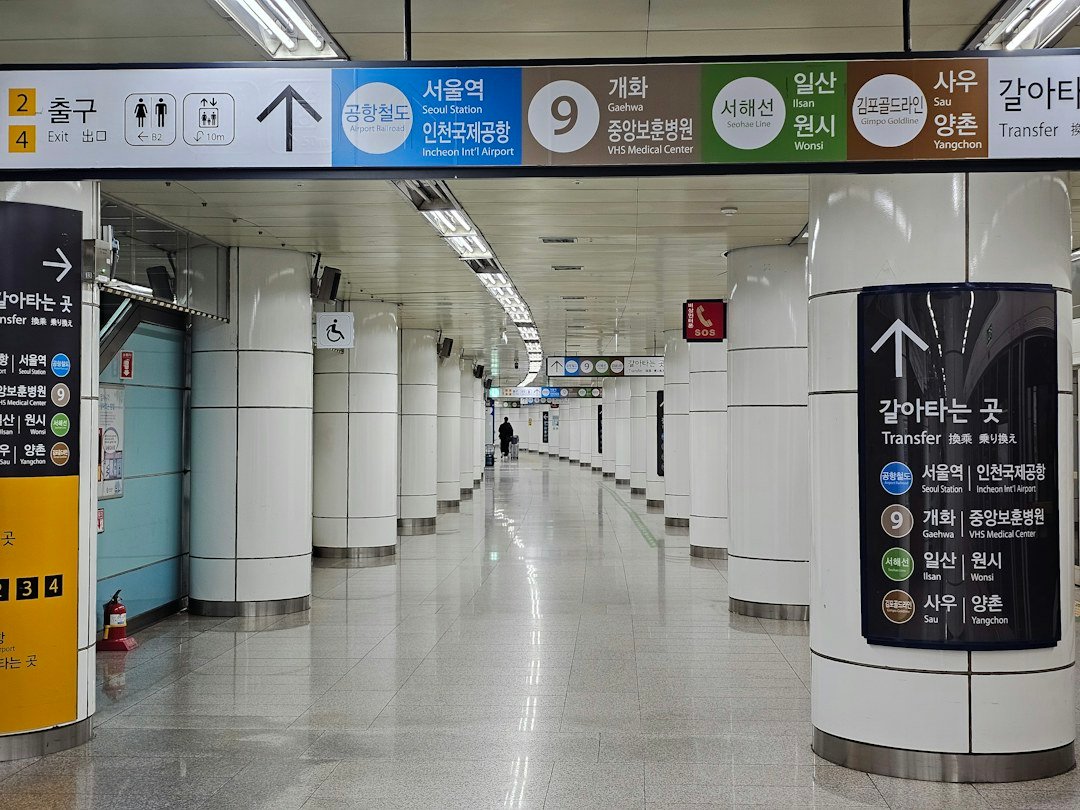
Featured photo: Korean subway station interior. Photo by KS KYUNG / Unsplash, used under the Unsplash License.