
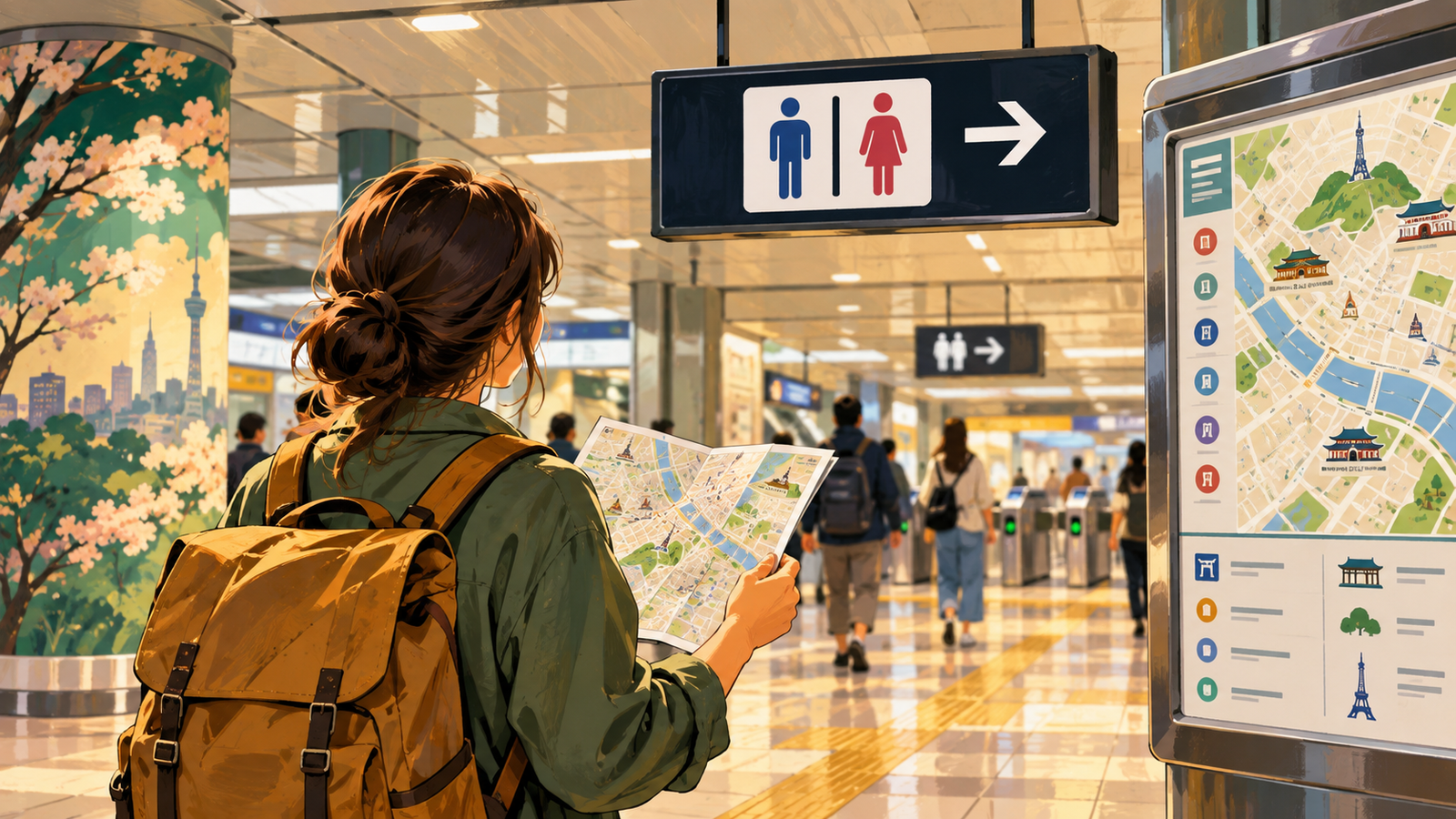
If you need a restroom in Seoul, search 화장실 (“restroom”) in Naver Map, or use Seoul’s Smart Seoul Map public-restroom layer. Before walking, check whether the facility is open and—if it is in a subway station—whether it sits inside the paid area. Inside the restroom, follow that facility’s signs for toilet paper; there is no reliable one-rule-fits-all shortcut.
Last checked: October 3, 2026. This guide uses current Seoul Metropolitan Government information and traveler questions as leads; it does not claim a personal visit to each facility.
Three reliable ways to look
- Search the Korean word. Type
화장실in Naver Map and check the result’s name, address, and route. Seoul’s official restroom-location page specifically lists searching “화장실” in Naver Map as one way to locate public or open restrooms. - Use Seoul’s public-restroom map. The city directs visitors to Smart Seoul Map → Urban Living Maps → Public Restrooms. Open the city’s public-restroom map and allow location access only if you want nearby results; you can also pan or search the area yourself.
- Check a station’s details before you leave the paid area. Subway stations are useful places to search, but a restroom may be inside or outside ticket gates, and station details can differ. Look for the Korean label
화장실in the station information or ask staff before tapping out if you need to return.
A quick Korean question is 화장실 어디예요? (hwa-jang-sil eo-di-ye-yo?) — “Where is the restroom?” You can show the phrase on your phone if pronunciation is difficult.
“Public” and “open” do not always mean the same thing
Korea’s Ministry of the Interior and Safety distinguishes public toilets from “open toilets,” which can include facilities in privately owned buildings that have been made available to the public. That means a map listing is a useful lead, not a promise that every door is open at every hour. Check any listed hours, closure notice, entrance instructions, or fee before you make a detour. If a building is closed, do not assume you can enter just because its restroom appears on a map.
In a large station, mall, park, or public building, follow restroom symbols and ask staff where the nearest facility is. In a café or restaurant, the restroom may be for customers or require a door code; ask rather than assuming. When time is tight, search first, then confirm the building and entrance on the ground.
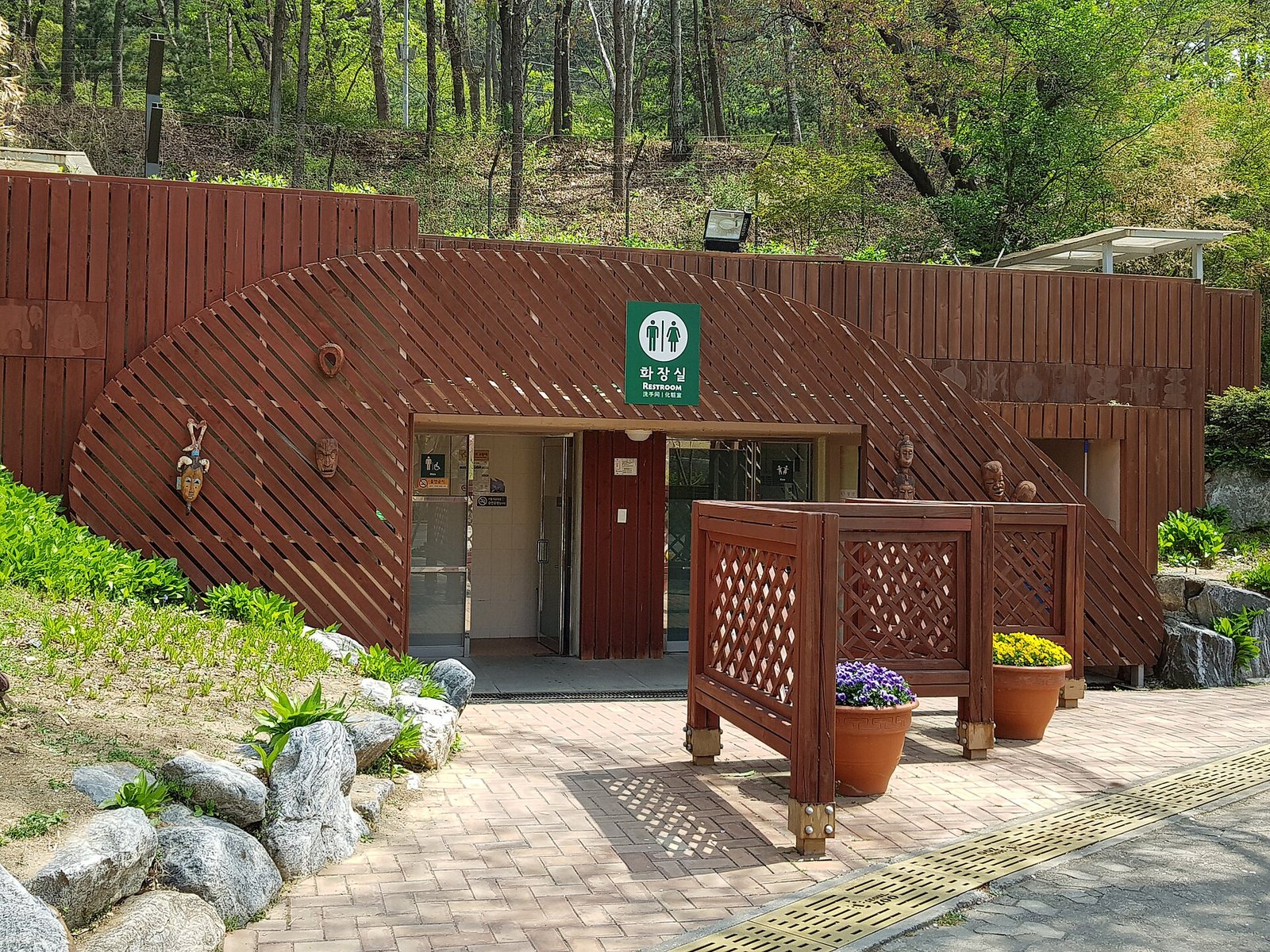

Toilet paper: read the sign in that room
Travel discussions often give conflicting advice about flushing toilet paper in Korea. Conditions and instructions vary by facility. Some restrooms provide paper outside the individual stall; others keep it inside. Some display a notice about using a bin. Check before entering the stall, then follow the posted instruction in that specific restroom. If a notice says to use the bin, do so. Do not flush wet wipes, sanitary products, or other items that the sign says not to flush.
A small packet of tissues is a low-cost backup for a dispenser that is empty or not where you expect it. It is not a reason to ignore a sign. If you cannot understand the notice, look for a toilet-paper or bin symbol, or ask staff.
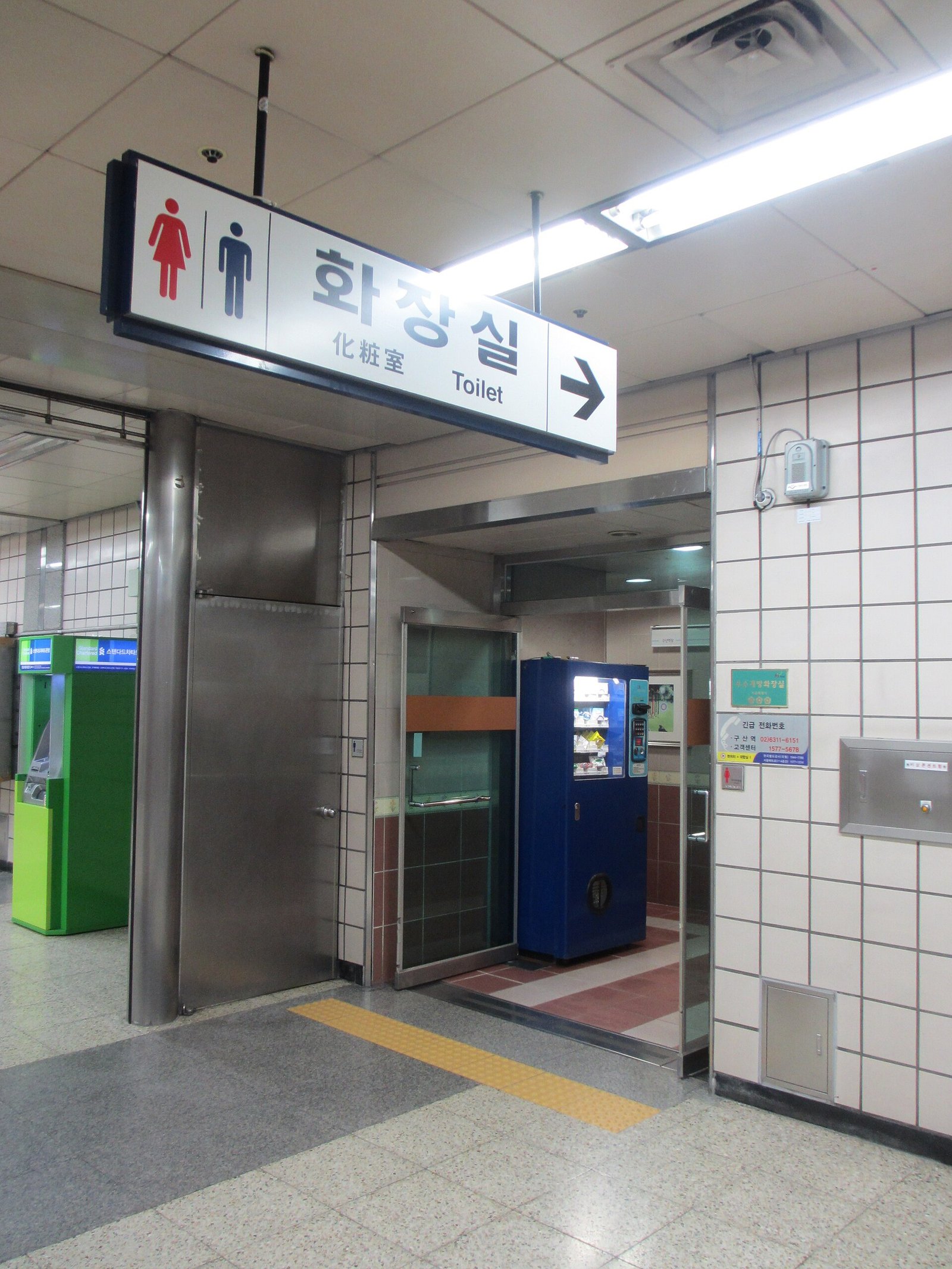

If you need an accessible or family restroom
Do not infer step-free access, an accessible stall, or a changing table from the word “public.” Seoul provides restroom-location information through Smart Seoul Map, and Seoul Metro publishes station-restroom details for stations in its network; still confirm the exact facility and current access before making a special trip. Station layouts and entrances can change, and a map pin may not tell you whether there is a lift on your route.
For station facilities, the Seoul Metro restroom dataset lists location details and amenities for lines 1–8 (the dataset says it is based on February 12, 2026). Treat it as a planning aid, not a real-time status feed.
A 30-second restroom plan
- Search
화장실in Naver Map; for Seoul public facilities, try Smart Seoul Map. - Check hours, address, and the entrance—not only the map pin.
- At a subway station, confirm whether the restroom is inside or outside the paid area before exiting.
- At the restroom door, check where paper is supplied and read the disposal notice.
- Carry a small tissue pack; never flush wipes or items prohibited by the posted sign.
For help finding a station or route, see our Seoul subway guide. The Seoul city map and facility details can change, so check the live map again when you travel.
Official sources
- Seoul Metropolitan Government: Find restroom locations (updated July 15, 2025)
- Smart Seoul Map: Public restrooms (checked October 3, 2026)
- Ministry of the Interior and Safety: Understanding public restrooms and open restrooms
- Public Data Portal: Seoul Metro station restroom information
Question for readers: Which label or search term helped you find a restroom in Korea? Please share the neighborhood, not private accommodation access details.
Illustration: Original AI-assisted editorial artwork created for Local Korean Guide. It represents a general wayfinding scene, not a specific station or documentary photograph.